
Sandusky County, OH — May 22, 2025, three people were injured following a dual commercial truck accident at 6:00 a.m. along the Ohio Turnpike.
According to initial details about the accident, it took place in the are of State Route 53 along westbound lanes of the turnpike.
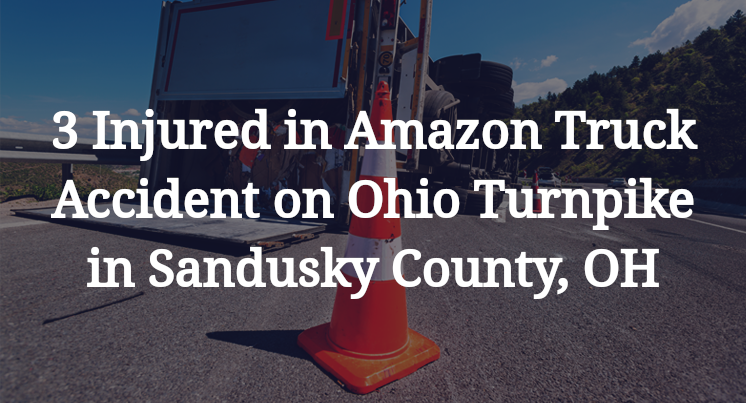
Authorities say that an Amazon tractor-trailer experienced mechanical issues and pulled off onto the berm. The truck reportedly had its hazard lights on at the time. While there, another semi-truck somehow crashed into the parked Amazon tractor-trailer.
Due to the collision, the second driver reportedly had life-threatening injuries. Two people from the Amazon truck reportedly had minor injuries. Right now, additional details about the crash remain unconfirmed.
Commentary by Attorney Michael Grossman
When people read that a moving semi-truck slammed into a parked 18-wheeler on the side of the highway, the first reaction is usually: How does something like that even happen? After all, when a truck pulls off the road due to mechanical trouble and activates its hazard lights, most drivers expect that’s enough to stay safe. But as this incident shows, pulling off to the side is no guarantee of safety—especially when heavy trucks are involved.
The Central Question: Why Did the Moving Truck Fail to Avoid the Parked One?
According to initial reports, the Amazon truck had mechanical issues and stopped on the berm with hazard lights flashing. That usually signals that a truck is out of commission but trying to follow safety protocols. So the key issue becomes: What caused the second truck to strike it?
Was the second driver distracted or drowsy? Did weather or poor visibility play a role? Was the parked Amazon truck visible enough—especially in early morning conditions? Those are critical questions that don’t yet have answers.
In past cases I’ve handled, it’s often the ECM—the truck’s black box—that reveals what the driver was doing right before the crash. Was there any braking? A sudden steering movement? Was cruise control still engaged? Similarly, in-cab cameras, if installed, can show whether a driver was looking at the road or somewhere else entirely. And phone records can confirm or rule out cell phone use as a factor. Without that evidence, we’re left guessing.
Parking on the Berm: Safe Move or Safety Risk?
Another question that deserves attention is whether the Amazon truck was parked safely. Even when a vehicle breaks down, drivers still have legal responsibilities. Did the driver set out flares or reflective triangles, as federal law requires? Were those items placed far enough back to give oncoming traffic time to react? And was the truck pulled off completely, or still partially in the right lane?
The answers to those questions matter because, under the law, a parked truck on the highway can be held responsible even when another vehicle crashes into it—if it’s determined that the truck wasn’t properly secured or marked. I’ve worked on cases where seemingly “blameless” trucks were found partially at fault because they failed to follow standard safety protocols.
The Investigation Has to Go Beyond the Obvious
Right now, we know one driver has life-threatening injuries and two more people are hurt, but we don’t yet know how or why. Mechanical issues happen, but crashes like this demand a full accounting. That means looking at black box data, camera footage, safety logs, and company protocols—not just taking anyone’s word for what happened.
Key Takeaways
- A moving semi struck a parked Amazon truck on the berm, raising serious questions about driver attention and visibility.
- It’s unknown if the parked truck followed federal rules for emergency stops, like using flares or reflective triangles.
- ECM data, in-cab video, and phone records will be essential to determine who was at fault and why.
- Both trucking companies may come under scrutiny depending on the results of the investigation.
- Getting to the bottom of this crash means gathering hard evidence—not just relying on early reports.

 call us
  Email Us
  Text us