
Austin, TX — April 15, 2025, One person was killed following a car accident that occurred at around 4:57 P.M. on S. Pleasant Valley Road.
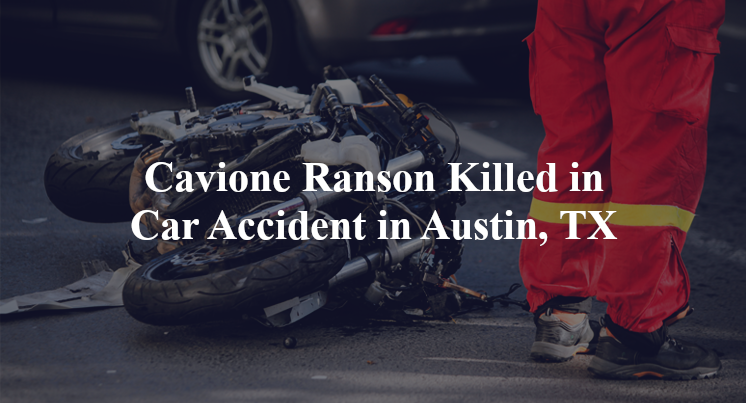
An investigation is underway following a car accident that left one person dead during the afternoon hours of April 15th. According to official reports, a motorcycle operated by Cavione Ranson was traveling on S. Pleasant Valley Road near Lady Bird Lake, when for unknown reasons the motorcycle was struck by a vehicle.
When first responders arrived on the scene, they found that Ranson had sustained fatal injuries and and they were pronounced deceased. At this time there has been no further information released about the accident, however this remains an ongoing investigation, and more details may be released by authorities in the future.
Commentary by Attorney Michael Grossman
When a motorcyclist loses their life in a collision with another vehicle, it’s common for the public narrative to form quickly—often based on limited details and assumptions about fault. But in serious crashes like this, where the circumstances remain unclear, the only responsible course of action is to step back and ask the right questions. The answers to these questions don’t just clarify what happened; they ensure that nothing critical is missed in understanding why it happened.
The first question is whether the authorities conducted a thorough investigation. When a motorcyclist is struck by another vehicle, it’s vital that the crash scene be documented with precision. That means collecting physical evidence such as debris patterns, tire marks, and vehicle damage profiles, as well as securing any available witness statements. Additionally, the dynamics of motorcycle crashes often involve subtle details that require specialized expertise to interpret—like visibility, driver reaction times, and point of impact. Given the vulnerability of motorcyclists on the road, a complete reconstruction of the events is essential to understanding causation and potential liability. If those steps weren’t taken—or couldn’t be due to time or resource constraints—then additional review may be warranted.
Next, it’s important to ask whether a vehicle defect could have played a role. While most assume that the crash resulted purely from human error or failure to yield, mechanical issues on either vehicle involved can’t be ruled out without investigation. A failure in the braking system, a steering malfunction, or a problem with throttle control could cause a vehicle to veer unexpectedly into the motorcyclist’s path. These are complex issues that only come to light when the involved vehicles are preserved and subjected to forensic analysis. Unfortunately, if either vehicle is repaired or disposed of too soon, the opportunity to detect a contributing defect is often lost.
Finally, we must consider whether all available electronic data has been collected. Most modern vehicles are equipped with an Electronic Control Module, or ECM—commonly called the “black box.” This device can capture crucial data such as speed, braking, and steering input in the seconds before impact. For a case involving a motorcyclist, this data can help determine whether the vehicle that struck the bike was operating within normal parameters or if something unexpected occurred. In addition, surveillance footage, dash cam recordings, and even cell phone data can all provide valuable context. But as with all forms of digital evidence, time is of the essence—if not gathered quickly, it may be permanently lost.
When someone loses their life in a crash, particularly a motorcyclist whose exposure makes them uniquely vulnerable, the questions we ask in the aftermath matter greatly. We owe it to those involved—and to the broader community—to ensure the investigation is thorough, the evidence preserved, and no explanation left unexplored. That’s the only way to arrive at the truth.

 call us
  Email Us
  Text us