
Woodburn, OR — October 26, 2025, Didier Fuentes was killed in a truck accident at about 2:40 p.m. on southbound Interstate 5.
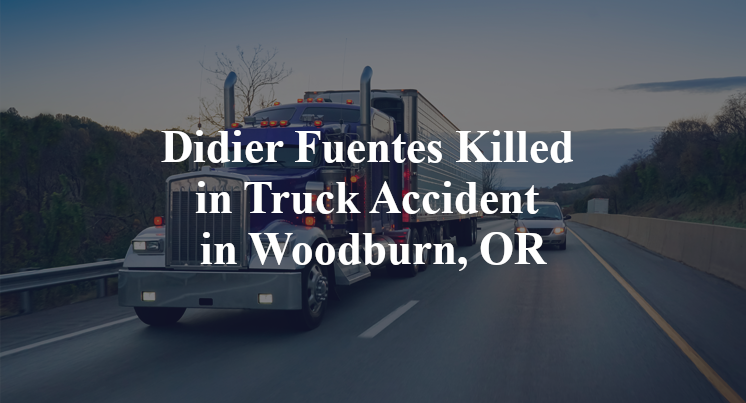
Authorities said a Chevrolet pickup was merging onto the highway near exit 271 when it was struck by a Western Star semi-truck. The impact caused the truck to jackknife and crash into a Jeep Grand Cherokee. A Toyota Matrix was damaged by debris from the crash.
Chevrolet driver Didier Lair Fuentes, 26, of Keizer died after being taken to a local hospital, according to authorities.
The Toyota driver suffered minor injuries, authorities said, while the other two drivers were unhurt.
Authorities have not released any additional information about the Marion County crash at this time.
Commentary by Attorney Michael Grossman
When people see news that a pickup merging onto I-5 was struck by an 18-wheeler, one of the first things they’re likely to ask is, how does something like that even happen? After all, merging onto a highway is a routine part of driving. So when that turns deadly, it usually means something in the process went badly wrong, and figuring out what that was should be the top priority.
Based on initial reports, a Chevrolet pickup was merging near exit 271 when it was hit by a semi-truck, which then jackknifed and struck a Jeep. Debris from that collision damaged a fourth vehicle. What we don’t yet know, and what will ultimately shape any accountability, is the chain of events leading up to the first impact.
Was the semi-truck already in the right lane as the pickup attempted to merge? Or was the truck changing lanes at the same time? Did either driver make a sudden maneuver or fail to yield? These are not minor details. They’re central to determining fault. And until we have answers, it’s impossible to say who bears legal responsibility.
That’s why an investigation needs to go beyond surface-level police reports. Commercial trucks carry critical data in their engine control modules, often called black boxes. That information can tell us whether the truck was accelerating, braking or maintaining a consistent speed in the moments before the crash. If the truck had in-cab cameras, a common feature these days, they might provide visual confirmation of what the driver saw and did.
We also don’t know yet whether distractions were a factor. Was the truck driver on their phone? Were they reaching for something or dealing with fatigue? Those answers can be found in phone records, time logs and dispatch communications, but only if someone takes the time to obtain them.
I’ve handled cases where the physical evidence told one story, but the data told another. In one case, a driver claimed to have braked before impact, but the ECM proved otherwise. Without that kind of documentation, it’s all too easy for key facts to slip through the cracks.
Another layer to consider is whether the trucking company did its job in hiring and training the driver. Was the driver qualified? Did they have a clean safety record? I’ve handled cases where a driver caused a crash that could have been prevented with proper vetting. In one memorable case, the driver had been fired from multiple companies, but still landed behind the wheel of an 18-wheeler, thanks to a rushed hiring process and inadequate testing. That kind of corner-cutting can have deadly consequences.
At the end of the day, the most useful question is also the most basic: What story does the evidence tell? Whether that story points to driver error, company negligence or both, it won’t be clear until all the facts are in.
Key Takeaways:
- The exact sequence of events that led to the crash is still unclear, particularly regarding who had the right of way and whether either vehicle made an unsafe maneuver.
- Critical evidence — such as ECM data, dash cam footage and cell phone records — will help determine whether the truck driver’s actions played a role.
- A thorough investigation should also evaluate the trucking company’s hiring and training practices to assess any underlying negligence.
- Legal responsibility in crashes like this often involves more than just one individual; company oversight can be a key factor.
- Until all evidence is reviewed, conclusions about fault remain premature.

 call us
  Email Us
  Text us