
Hager City, WI — October 24, 2025, Dillon Tincher was injured due to a single-vehicle truck accident just before 5:45 a.m. along Great River Road (S.H. 35).
According to authorities, 24-year-old Dillon Tincher was traveling in a northwest bound International 18-wheeler on Great River Road in the vicinity of the C.R. VV intersection when the accident took place.
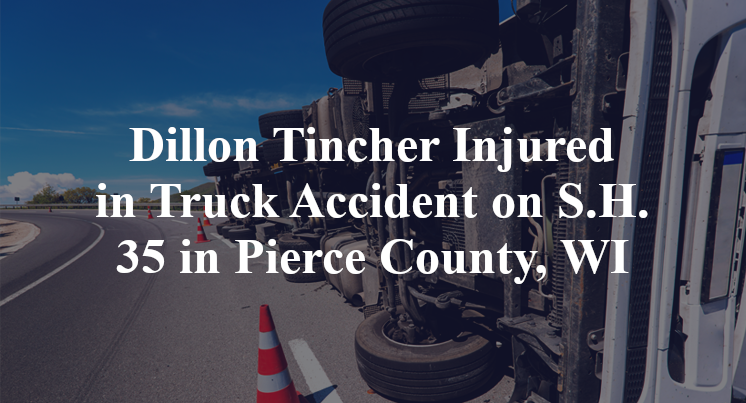
Officials indicate that, for as yet unknown reasons, the 18-wheeler failed to safely maintain control. It was consequently involved in a single-vehicle collision in which it apparently crashed into a ditch and stuck a tree.
Tincher reportedly sustained injuries of unknown severity over the course of the accident; he was transported to an area medical facility by EMS in order to receive necessary treatment. Additional details pertaining to this incident are not available at this point in time. The investigation is currently ongoing.
Commentary by Attorney Michael Grossman
When an 18-wheeler leaves the roadway and crashes into a ditch and tree, the first thing I want to know is: What caused the driver to lose control? In a single-vehicle crash like this—especially one occurring just before sunrise—there are several possible factors, and most of them point to something that could have been prevented.
At that hour, low light conditions may have affected visibility, but that alone wouldn’t explain a truck veering off the road unless the driver couldn’t see well enough to stay in the lane—or failed to react to a curve, obstruction, or sudden hazard. More commonly, though, early morning crashes like this are linked to driver fatigue, especially if the driver had been operating overnight or had started their shift without adequate rest.
Another possibility is distraction. Was the driver looking at a phone, GPS, or dispatch device? Even a few seconds of inattention can cause a fully loaded 18-wheeler to drift off course, and once it leaves the pavement, recovery is difficult. The truck’s ECM data, along with cell phone records, could shed light on whether distraction or drowsiness played a role.
Finally, there’s always the possibility of equipment failure—such as a tire blowout or brake issue. That’s why a mechanical inspection of the truck is essential. If a worn tire, faulty suspension, or neglected steering component contributed to the crash, liability could extend to the company responsible for maintenance.
Key Takeaways:
- Driver distraction or fatigue are leading suspects in early morning single-vehicle truck crashes.
- ECM and cell phone data can clarify what the driver was doing in the moments leading up to the wreck.
- Mechanical failure must be ruled out through a full inspection of tires, brakes, and steering components.
- Even without another vehicle involved, accountability depends on the facts uncovered through proper investigation.

 call us
  Email Us
  Text us