
Finney County, KS — October 27, 2025, Lukas Demel was injured due to a truck accident at approximately 7:00 a.m. along U.S. Highway 50.
According to authorities, 39-year-old Lukas Demel was traveling in an eastbound Chevrolet Silverado pickup truck on U.S. 50 in the vicinity just east of Garden City when the accident took place.
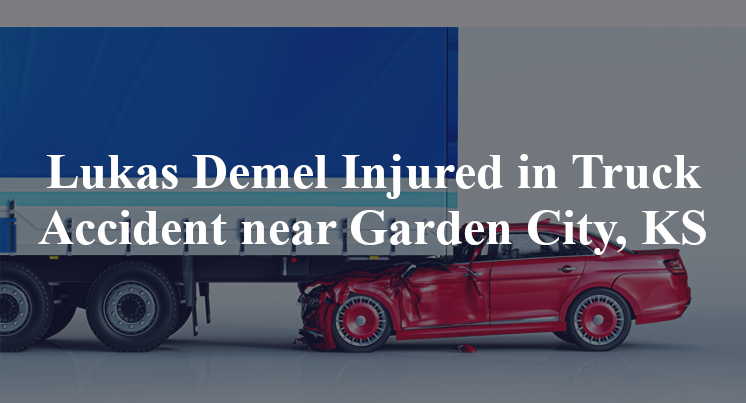
Ahead of the pickup truck, an eastbound International 18-wheeler was apparently slowing in preparation of making a right turn. Officials indicate that, for as yet unknown reasons, a collision occurred between the rear-end of the 18-wheeler and the front-end of the Silverado.
Demel reportedly sustained serious injuries as a result of the wreck; he was transported to a local medical facility by EMS in order to receive necessary treatment. No other injuries have been reported. Additional details pertaining to this incident are not available at this point in time. The investigation is currently ongoing.
Commentary by Attorney Michael Grossman
When a pickup truck collides with the rear of a slowing 18-wheeler, most people assume the trailing driver was simply following too closely. But that assumption overlooks several critical legal questions—especially when serious injuries result. Rear-end collisions involving commercial trucks require a deeper look at how visible and predictable the truck’s actions were leading up to the crash.
In this case, the truck was reportedly preparing to turn right. That raises immediate questions: Was the truck signaling in advance? Did it slow gradually, or brake suddenly? Was it partially in the travel lane, or beginning a wide turn that may have confused the driver behind? These details are essential for determining whether the pickup driver had a fair opportunity to recognize what the truck was doing and respond in time.
Another major factor is vehicle conspicuity—especially during early morning hours around 7:00 a.m. Was the truck’s lighting functioning and visible? Were its brake lights, turn indicators, and reflectors clean and operational? If the trailer was hard to see due to poor maintenance or lighting conditions, then the pickup driver may not be fully at fault for failing to react in time.
There’s also the question of road configuration. Did the truck have access to a dedicated turn lane, or was it slowing in a main travel lane without a clear shoulder or exit path? If the design of the roadway forced the truck to decelerate unexpectedly or block traffic while making a turn, that’s a safety hazard worth factoring into the analysis.
In similar cases I’ve handled, responsibility often hinges not just on following distance, but on whether the truck’s movements created a sudden or poorly signaled hazard. That’s why ECM data, dash cam footage, and maintenance records will be crucial in determining whether the truck driver acted safely—or left the driver behind with too little room to avoid a collision.
Key Takeaways:
- The legal focus is on whether the truck gave clear, early warning before slowing to turn, and whether its position was predictable.
- Vehicle visibility and lighting—especially in early morning hours—are important factors to investigate.
- Road layout may have contributed if the truck was slowing in an active travel lane without a designated turn-off.
- ECM data, dash cams, and inspection records will be key to reconstructing the truck’s movements and condition.
- Rear-end collisions with large trucks are not always cut and dry—fault depends on whether the truck created a foreseeable and avoidable hazard.

 call us
  Email Us
  Text us