
Helotes , TX — September 28, 2025, a man was injured due to a motorcycle accident shortly before 12:30 a.m. along Farm to Market 1560.
According to authorities, a 20-year-old man was traveling on a southeast bound Suzuki motorcycle at the Riggs Road and F.M. 1560 intersection when the accident took place.
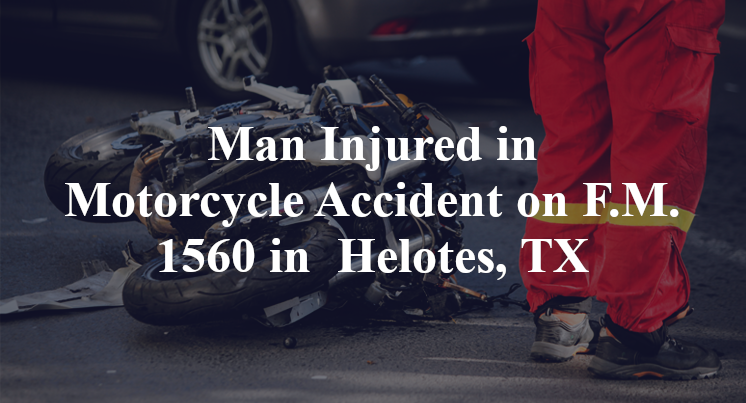
Officials indicate that, for reasons yet to be confirmed, the motorcycle failed to safely complete a left turn. It was consequently involved in a single-vehicle collision in which it apparently struck a median barrier. The man reportedly sustained serious injuries over the course of the accident. Additional details pertaining to this incident—including the identity of the victim—are not available at this point in time. The investigation is currently ongoing.
Commentary by Attorney Michael Grossman
A late-night motorcycle crash during a turn is the kind of incident people often chalk up to inexperience or speed. But when someone ends up seriously injured, it’s not enough to guess—it’s time to look harder at what might have gone wrong beyond just the rider’s actions.
1. Did the authorities thoroughly investigate the crash?
A failed turn that results in a collision with a median should prompt a detailed review of the crash scene. Did investigators measure the angle of the turn and assess whether the median was clearly visible and properly marked? Was the motorcycle’s path mapped to determine if the rider tried to correct or brake before impact? Especially around midnight, factors like lighting and signage visibility can complicate what might seem like a straightforward maneuver. If those details weren’t fully captured, important context may already be missing.
2. Has anyone looked into the possibility that a vehicle defect caused the crash?
Motorcycles rely on absolute mechanical precision. If the Suzuki had issues with front brake balance, steering sensitivity, or throttle response, those could have made the bike unstable mid-turn. Even a suspension or tire defect could cause the rider to lose control—particularly during a lean or quick maneuver. These problems don’t always show up in the wreckage, and they’re easy to miss without a close mechanical inspection.
3. Has all the electronic data relating to the crash been collected?
While most motorcycles don’t log as much data as modern cars, many newer models do include some level of diagnostic tracking. If the bike had an onboard system or if the rider was using a GPS-enabled phone or wearable, that information could help reconstruct speed, lean angle, throttle input, or braking. In a crash without outside witnesses, those digital traces may be the only way to understand what led up to the impact.
When a rider goes down trying to make a turn, the assumption is often that they misjudged it. But the truth may lie in the systems under the seat—not just the decisions behind the handlebars.
Takeaways:
- Motorcycle crashes during turns require full documentation of the scene and vehicle path.
- Brake, suspension, or throttle issues may contribute to failed maneuvers.
- Diagnostic or GPS data from the motorcycle or rider can help clarify pre-crash behavior.

 call us
  Email Us
  Text us