
Austin, TX — July 10, 2025, Nayely Medrano-Arias was killed in a car accident at about 12:30 a.m. at the Interstate-35 frontage road and Grand Avenue Parkway.
A preliminary accident report indicates that a 2024 Kawasaki EX500 motorcycle was heading south on the frontage road when it collided with an eastbound 2013 Nissan Altima that was turning.
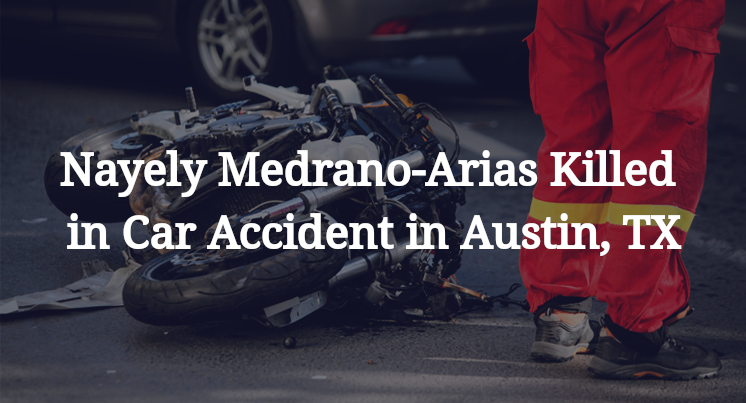
Motorcyclist Nayely Montserrat Medrano-Arias, 19, died in the crash, according to the report.
The Nissan driver, who was not hurt, was cited for failure to yield, the report states.
Authorities have not released any additional information about the Travis County accident at this time.
Commentary by Attorney Michael Grossman
After a fatal crash like this, the natural instinct is to ask how and why, but far too often, the answers given are incomplete. When a crash takes a life, especially one so young, it’s not enough to simply accept what appears on the surface. The real work begins with asking deeper questions, because someone needs to.
Did the authorities thoroughly investigate the crash? A citation for failure to yield suggests law enforcement made a determination quickly, but that alone doesn’t prove they peeled back every layer. Turning crashes, particularly those involving motorcycles, demand more than a surface-level conclusion. Did investigators map the collision with laser scanning or measure distances that could help reconstruct the exact timing? Did they look into whether either vehicle attempted evasive action? At 12:30 a.m., lighting and line-of-sight might confuse matters, but that’s all the more reason to ensure investigators had the tools and training to go beyond first impressions.
Has anyone looked into the possibility that a vehicle defect caused the crash? It’s easy to focus blame on human error, especially when a citation is issued, but machinery can’t be overlooked. Was the motorcycle in perfect working order? Did the brakes on the Nissan respond when the driver intended to stop? Even something like a delay in the motorcycle’s throttle return or a malfunctioning turn signal could have changed the trajectory of the crash. If neither vehicle was mechanically inspected after the collision, then a crucial piece of the truth might still be missing.
Has all the electronic data relating to the crash been collected? Beyond what drivers say, electronic records often tell a fuller story. GPS logs, cell phone activity or even the Altima’s onboard diagnostics could confirm what happened in those final seconds: was the car turning slowly or sharply? Did the motorcycle attempt to brake? At that hour, traffic may have been light, but nearby surveillance cameras or intersection sensors might have recorded the incident. If no one has reviewed those digital trails, then what’s currently known may not be the whole picture.
In tragic moments like this, it’s tempting to settle for the clearest answer. But clarity is not the same as completeness. Only when every angle is explored — every machine checked, every record pulled — can anyone say with confidence that the truth has been honored.
Key Takeaways:
- Citing a driver doesn’t always mean the investigation was thorough.
- Mechanical issues in either vehicle could have influenced the crash.
- Digital data like GPS, diagnostics, and cameras may reveal unseen details.

 call us
  Email Us
  Text us