
Sarpy County, NE — April 20, 2025, Omar Contreras was killed in a truck accident at about 6:45 a.m. on westbound Interstate 80.
Authorities said a semi-truck crashed into a Chevrolet Impala near mile marker 439 east of Linoma Beach. The car had been rendered undriveable after it lost its right front tire.
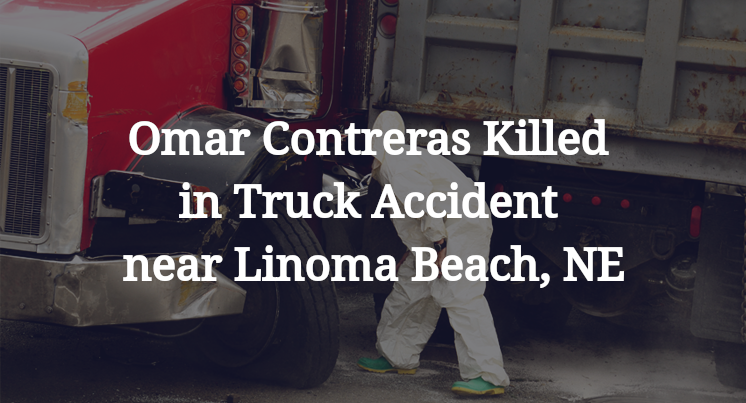
Chevrolet driver Omar Contreras, 29, died at the scene of the crash, according to authorities, while the truck driver was not injured.
Authorities have not released any additional information about the Sarpy County crash at this time. The accident is still being investigated.
Commentary by Attorney Michael Grossman
When a disabled vehicle is struck by a semi-truck on the highway, the key legal question is whether the truck driver had a reasonable opportunity to avoid the collision. According to reports, a Chevrolet Impala lost a tire on westbound I-80 then it was struck by a semi-truck. The result was fatal for the driver of the Impala, raising serious questions about timing, visibility and decision-making by the truck driver.
Disabled vehicles on high-speed highways are a recognized hazard, and commercial drivers are specifically trained to be alert for them, especially during early morning hours when visibility can be compromised. At 6:45 a.m., daylight may just be breaking, which puts even more emphasis on the truck driver’s duty to maintain a safe speed and watch for road hazards ahead.
If the Impala came to rest in a travel lane, the truck driver may not have had much time to react, but that’s exactly why following distance and scanning the road ahead are so critical. The truck’s engine control module will help answer the most important questions: How fast was the truck going? Did the driver apply the brakes before the impact? Was there any attempt to swerve or avoid the collision? Investigators will also need to determine whether the disabled vehicle had hazard lights on or if the driver had exited the vehicle, though none of those details have yet been released.
It’s also important to consider how long the car had been disabled before the crash occurred. If it had been stationary for any significant amount of time and was clearly visible, it strengthens the case that the truck driver should have seen and responded to the hazard. If the tire failure and collision happened in quick succession, that timeline changes how much reaction time was realistically available.
In cases like this, the burden is on the investigation to establish whether the truck driver was simply in an impossible situation, or whether the crash was preventable with more attentive driving. Because when a vehicle is stopped or stranded on the highway, it doesn’t take long for a bad situation to turn fatal. And when the other vehicle is an 80,000-pound truck, the margin for error is next to zero.

 call us
  Email Us
  Text us