

Richard Wenger Killed in 18-Wheeler Accident in Marshall County, IA
Marshall County, IA — March 4, 2025, Richard Wenger was killed following an 18-wheeler accident that occurred at around 2:28 P.M. on Highway 330.
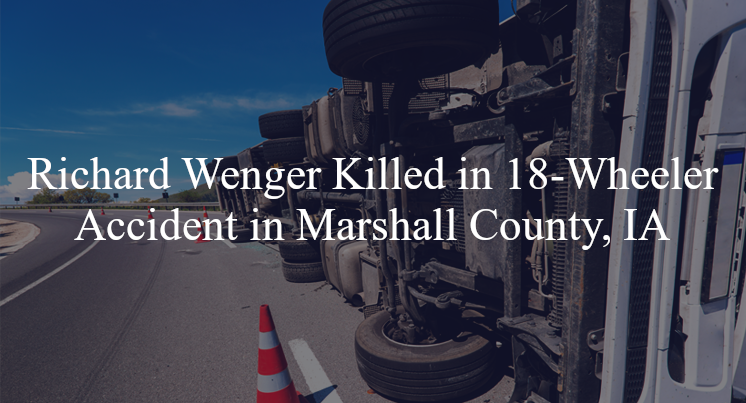
Authorities are investigating after an 18-wheeler accident left one person dead on March 4th. According to official statements, an 18-wheeler operated by Richard Wenger was travelling on Highway 330 in the northbound bound lanes when for unknown reasons the tractor-trailer lost control, causing the truck to leave the roadway and fall onto the eastbound lanes of Highway 30, catching fire after impact.
When first responders arrived on the scene, they found that Wenger had sustained fatal injuries and he was pronounced deceased. At this time there has been no further information released from the accident, including what caused the truck to lose control, however this remains an ongoing investigation and more details may be released by authorities in the future.
Commentary by Attorney Michael Grossman
When I read about a crash like this, my first thought is that I hope investigators can provide clear answers for the loved ones of those involved. A tractor-trailer losing control, leaving the roadway, falling onto another highway, and catching fire raises serious concerns about road conditions, possible mechanical failures, and whether external factors played a role. While initial reports confirm what happened, they don’t necessarily explain why it happened. To truly understand the cause, three critical questions must be asked.
First, have authorities thoroughly investigated the crash? Law enforcement will typically document the scene, assess road conditions, and consider possible contributing factors such as weather, visibility, and roadway hazards. However, deeper analysis is often necessary. Were there hazardous conditions on Highway 330—such as ice, standing water, or debris—that may have contributed to the truck losing control? Were there signs that the driver attempted to regain control before leaving the roadway? A full accident reconstruction could help determine whether external conditions played a role.
Second, has anyone looked into the possibility of a vehicle defect? When a large commercial truck loses control and crashes, it’s important to consider whether mechanical failures—such as brake malfunctions, steering issues, or tire blowouts—may have contributed to the accident. Additionally, commercial trucks require frequent inspections and maintenance—was the truck in proper working order, and had it recently been serviced? Since the vehicle caught fire, investigators should also examine whether a fuel system failure or other mechanical issue contributed to the severity of the accident. If a defect played a role, preserving the vehicle for forensic analysis is critical before key evidence is lost or overlooked.
Third, has all electronic data relating to the crash been collected? Most commercial trucks are equipped with electronic logging devices (ELDs) and electronic control modules (ECMs), which capture critical details such as speed, braking efforts, and steering input leading up to the crash. Additionally, nearby traffic cameras or dashcam footage from passing vehicles may provide valuable insight into what happened. If investigators don’t secure this evidence quickly, it may be lost, making it much harder to determine exactly what led to the crash.
At the end of the day, the driver’s family deserves clear answers. If the official investigation leaves any gaps, independent experts may be needed to ensure that every possible factor is considered. Whether the cause was environmental, mechanical, or something else entirely, the community owes it to those affected to make sure all available evidence is carefully examined.
“These are essential reads for anyone dealing with the aftermath of a truck wreck”– Attorney Cory Carlson