

2 Injured in Motorcycle Accident on S.H. 288 in Houston, TX
Houston, TX — January 17, 2025, two people were injured in a motorcycle versus car accident at approximately 10:15 p.m. along State Highway 288.
According to authorities, a 29-year-old man and a 22-year-old woman were traveling on a northbound Kawasaki motorcycle on S.H. 288 in the vicinity south of Holmes Road when the accident took place.
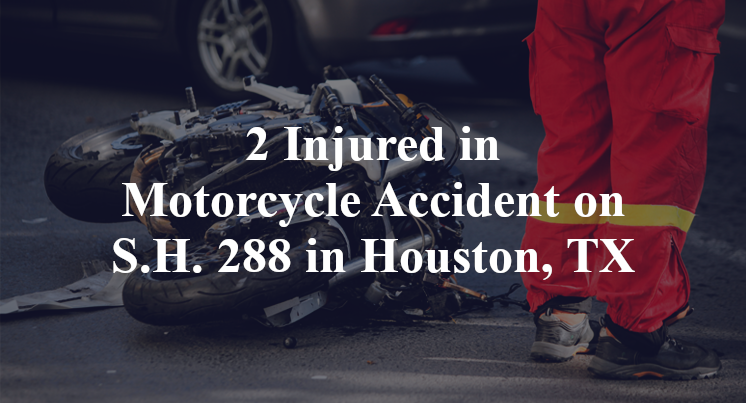
Officials indicate that, for as yet unknown reasons, the Kawasaki attempted a lane change at an apparently unsafe time. A sideswipe collision consequently took place between the motorcycle and a northbound Tesla.
The woman who had been a passenger on the motorcycle reportedly sustained serious injuries over the course of the accident. The man who had been with her on the motorcycle may have been injured, as well. Additional details pertaining to this incident—including the identities of the victims—are not available at this point in time. The investigation is currently ongoing.
Commentary by Attorney Michael Grossman
When a motorcycle is involved in a sideswipe collision with another vehicle—particularly on a high-speed roadway like State Highway 288—the consequences can be severe, as was reportedly the case in this Houston crash. A lane-change maneuver gone wrong often leads to assumptions about rider error, but in my experience, these kinds of incidents warrant a much closer look. To truly understand what led to the crash and the injuries that followed, it’s essential to start with three critical questions.
First, did investigators thoroughly evaluate the positioning of both vehicles and the traffic conditions at the time of the collision? It’s not enough to say the motorcycle changed lanes “at an unsafe time.” Was the Tesla traveling at a high rate of speed? Was there heavy traffic that made merging unpredictable? Were either vehicle's movements obstructed by blind spots or poor lighting? Investigators should carefully analyze the crash scene, check for skid marks or impact points, and review any available dashcam, surveillance, or traffic camera footage to determine how the lane change unfolded and whether the Tesla had time to react.
Second, has anyone considered whether a mechanical issue in either vehicle may have contributed to the crash? If the Kawasaki experienced a throttle surge, brake problem, or steering issue, that could have caused a sudden or unintentional lane departure. Likewise, if the Tesla's collision-avoidance systems failed to activate—or if its sensors didn’t detect the motorcycle in time—that could raise questions about how well its technology performed under real-world conditions. These types of concerns require a detailed forensic inspection and, in the case of the Tesla, a review of its internal system logs.
Finally, has all available electronic and digital evidence been collected? Motorcycles may not always carry event data recorders, but the Tesla certainly does. Its onboard systems can provide detailed telemetry data: speed, steering input, sensor activity, and driver-assist system behavior leading up to the crash. Investigators should also gather GPS data, dashcam footage, and cell phone records, which can help clarify how long the motorcycle had been attempting the maneuver and whether either party was distracted or otherwise impaired.
Answering these three questions is critical to making sure that no stone is left unturned in understanding the causes of a crash like this. Serious wrecks deserve serious investigation, not assumptions. Getting clear answers to these questions is crucial for those seeking to understand what happened and why—and it's the least that can be done to help those affected find the clarity and closure they deserve.
*We appreciate your feedback and welcome anyone to comment on our blog entries, however all visitor blog comments must be approved by the site moderator prior to showing live on the site. By submitting a blog comment you acknowledge that your post may appear live on the site for any visitors to see, pending moderator approval. The operators of this site are not responsible for the accuracy or content of the comments made by site visitors. By submitting a comment, blog post, or email to this site you acknowledge that you may receive a response with regard to your questions or concerns. If you contact Grossman Law Offices using this online form, your message will not create an attorney-client relationship and will not necessarily be treated as privileged or confidential! You should not send sensitive or confidential information via the Internet. Since the Internet is not necessarily a secure environment, it is not possible to ensure that your message sent via the Internet might be kept secure and confidential. When you fill out a contact or comment form, send us an email directly, initiate a chat session or call us, you acknowledge we may use your contact information to communicate with you in the future for marketing purposes, but such marketing will always be done in an ethical way.