

4 Injured in Multi-vehicle Truck Accident on S.H. 210 in San Dimas, CA
San Dimas, CA — April 19, 2025, four people were injured in a multi-vehicle truck accident sometime in the morning along State Highway 210.
According to authorities, the accident took place on State Highway 210 in the vicinity of San Dimas.
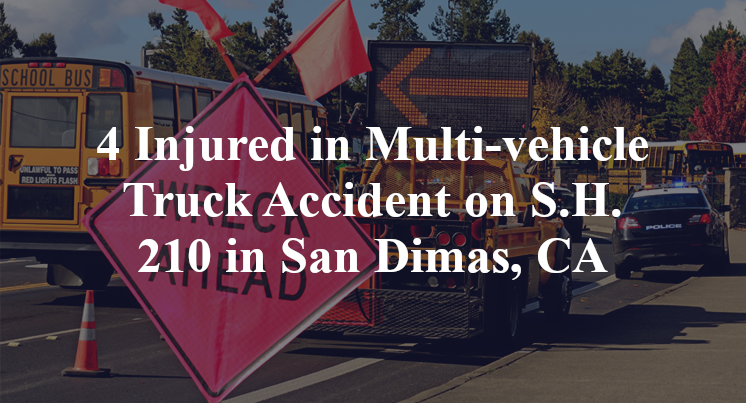
Officials indicate that, for as yet unknown reasons, an 18-wheeler with a trailer in tow failed to appropriately control its speed. It consequently lost control, reports state, and crashed into several other vehicles.
There were a total of nine vehicles involved in the wreck, according to reports, and while no one was killed, four people did sustain injuries; they were transported to local medical facilities by EMS in order to receive necessary treatment. Additional details pertaining to this incident—including the identities of the victims—are not available at this point in time. The investigation is currently ongoing.
Commentary by Attorney Michael Grossman
In my experience, when an 18-wheeler loses control and causes a crash that involves nine vehicles, the most pressing question isn’t just what caused the driver to lose control—it’s why a situation like that was even possible in the first place. Commercial vehicles don't simply "slip" into multi-vehicle wrecks on a clear highway. Something went wrong, either with the equipment, the conditions, or the decisions leading up to that moment.
Reports suggest the truck failed to control its speed before striking multiple vehicles. That immediately raises red flags. Was the driver following too closely for traffic conditions? Were they distracted, fatigued, or otherwise impaired? These are not small considerations—they're central to how we evaluate whether a crash like this could have been avoided. In high-traffic corridors like State Highway 210, professional drivers are expected to anticipate slowdowns, maintain safe following distances, and operate their vehicles in a way that minimizes risk to others.
The number of vehicles involved here also suggests that once the initial collision occurred, the truck’s momentum carried it through multiple lanes of traffic. That outcome typically points to a lack of space, awareness, or the inability to brake in time—all issues that become more dangerous in a vehicle that weighs 20 to 30 times more than the average car. If the 18-wheeler was loaded improperly or if the brakes weren’t maintained to spec, that could have drastically reduced the driver’s ability to regain control once trouble started.
If the truck was operating under a commercial carrier, the company needs to be part of this investigation. Was the driver being pushed to meet tight delivery schedules? Was the truck maintained properly, particularly its braking and suspension systems? Was the driver’s training adequate to handle high-speed, high-density conditions like those often found on CA-210? These behind-the-scenes factors have played a role in many of the worst crashes I’ve seen over the years, even if they’re not immediately visible at the scene.
From where I sit, a crash involving this many vehicles and injuries is not something that happens without a chain of bad decisions—or preventable oversights—somewhere along the line. A full investigation should not only identify what happened in the final seconds before impact, but whether the crash was set in motion well before the truck entered the highway that day. That’s the only way the right parties can be held accountable and those affected by the wreck receive the clarity and closure they deserve.
“These are essential reads for anyone dealing with the aftermath of a truck wreck”– Attorney Cory Carlson