

Arlington Man Injured in Truck Accident on I-30 in Fort Worth, TX
Fort Worth, TX — October 23, 2025, an Arlington man was injured in a truck accident at about 11:45 a.m. on westbound Interstate 30/East Freeway.
A preliminary accident report indicates that a 2023 Husqvarna Svartpilen 401 motorcycle collided with a 2015 Freightliner M2 semi-truck near Gateway Park.
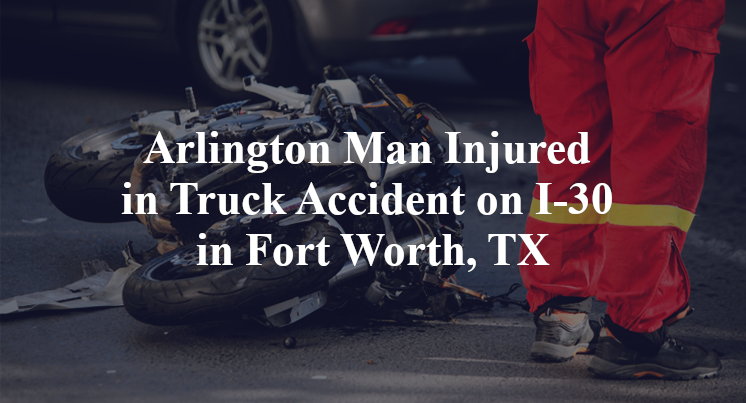
The motorcyclist, a 41-year-old Arlington man, was seriously injured in the crash, according to the report. His name has not been made public yet.
The truck driver was not hurt, the report states.
Authorities have not released any additional information about the Tarrant County crash at this time.
Commentary by Attorney Michael Grossman
When people read about a crash like this, they naturally wonder, How does something like that even happen? Especially around midday on a major freeway like I-30, it’s fair to ask what went wrong, and why a motorcyclist ended up seriously hurt while the truck driver walked away unscathed.
At this stage, there are more questions than answers. It’s not clear whether the motorcycle hit the truck or the truck hit the motorcycle. We don’t yet know which lane the collision happened in, or whether either vehicle was trying to change lanes or exit the freeway. Depending on whether the truck was moving, stopped or merging, very different legal questions arise. Without those answers, it's premature to assume who’s at fault, but we can say what kind of evidence will tell the story.
The first thing any serious investigation needs to do is get the truck’s engine control module (ECM) data, the digital “black box” that records vehicle speed, braking and throttle inputs. That will show whether the truck was slowing, accelerating or stationary when the crash occurred. If the truck was changing lanes, for example, we’d want to know whether the turn signal was activated. In-cab camera footage, if available, could shed light on whether the driver was paying attention to his surroundings.
Likewise, investigators should subpoena the driver’s cell phone records. I’ve worked cases where the truck driver was texting, using apps or even watching videos at the time of a crash. Without checking the phone records, there’s no way to rule that out.
Beyond the moment of impact, there are broader questions about how the driver was trained and supervised. What kind of safety protocols does the trucking company use to evaluate its drivers? Did this driver have a history of risky behavior on the road? I once handled a case involving a trucker who had been fired from multiple prior jobs for safety violations, yet somehow still got hired. When companies cut corners on vetting drivers, it’s only a matter of time before someone gets hurt.
That’s why it’s important not to treat this as just a “motorcycle crash” or a “truck crash.” This is a crash that may involve bad decisions, either in the cab, at the corporate level or both. The way to find out is through a full investigation based on hard data, not assumptions.
Key Takeaways:
- It’s not clear from current reports how the crash happened or which vehicle initiated contact.
- Critical evidence includes ECM data, in-cab camera footage and the truck driver’s cell phone records.
- The truck’s movements — whether stationary, changing lanes or merging — will help determine fault.
- A deeper look at the truck driver’s training and employment history could reveal preventable risks.
- Accountability depends on gathering all available evidence, not jumping to conclusions.
“These are essential reads for anyone dealing with the aftermath of a truck wreck”– Attorney Cory Carlson