

1 Injured in Truck Accident on 3rd St. in Memphis, TN
Memphis, TN — May 9, 2025, one person was injured in a truck accident at approximately 9:00 a.m. along South 3rd Street.
According to authorities, the accident took place on South 3rd Street in the vicinity near the East Mallory Avenue intersection.
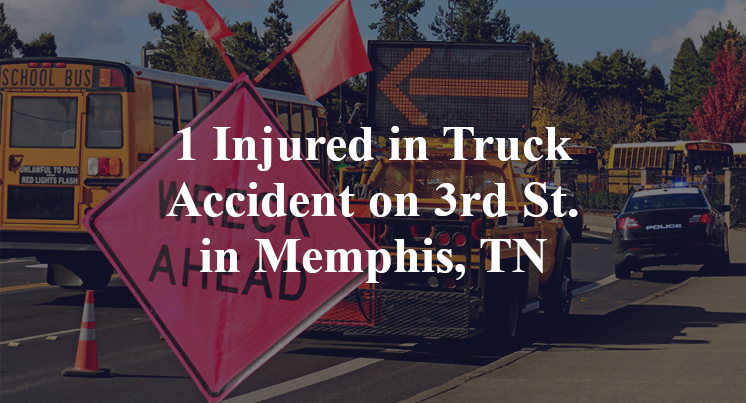
Details surrounding the accident remain scarce. Officials indicate that, for as yet unknown reasons, a collision took place between a white sedan and an 18-wheeler with a trailer in tow. One person who was involved in the wreck reportedly sustained critical injuries as a result and was transported to a local medical facility by EMS in order to receive immediate treatment. Additional information pertaining to this incident—including the identity of the victim—is not available at this point in time. The investigation is currently ongoing.
Commentary by Attorney Michael Grossman
When a crash between a passenger vehicle and an 18-wheeler results in critical injuries, especially in a dense urban area like South 3rd Street in Memphis, the central legal question is what led up to the collision, and could it have been prevented? These types of wrecks aren’t just about one driver making a sudden mistake. They’re often the result of a series of decisions—by the driver, the trucking company, or both—that culminate in a life-altering moment.
Urban roads like South 3rd are challenging for large trucks to navigate. They’re often crowded with other vehicles, involve tight turns, limited sightlines, and frequent stops. So the first question is whether the 18-wheeler was operating in a way that accounted for those conditions. Was the truck turning, changing lanes, or merging at the time of the crash? Did the driver check their blind spots before making a move? Was the truck’s speed appropriate for the flow of traffic? In commercial driving, it’s not enough to follow the letter of the law—a higher level of caution is required because of the size and weight of the vehicle.
It’s also worth considering whether the truck should have been operating in that corridor in the first place. Some routes are not well-suited for large trucks, either due to narrow lanes or high pedestrian and vehicle traffic. If the company sent the driver through an area not designed for commercial traffic—or failed to provide training on navigating such roads—that could point to a larger issue of poor planning or negligence.
And like any commercial vehicle crash, the trucking company itself must be part of the investigation. Was the driver properly trained and rested? Was the truck maintained in safe working order, with functional brakes, lights, and safety systems? I’ve seen too many cases where companies cut corners on these basics, only to have those decisions show up in the worst possible way—on a crowded street, during busy morning traffic, with people paying the price.
Getting to the bottom of a crash like this means asking the right questions and refusing to stop at surface-level explanations. Serious wrecks deserve serious investigation, not assumptions. Understanding whether the truck was operated safely, whether it belonged on that stretch of road, and whether the company met its obligations is essential to figuring out what might have happened. Getting clear answers to these questions is the least that can be done to help those affected find the clarity and closure they deserve.
“These are essential reads for anyone dealing with the aftermath of a truck wreck”– Attorney Cory Carlson