

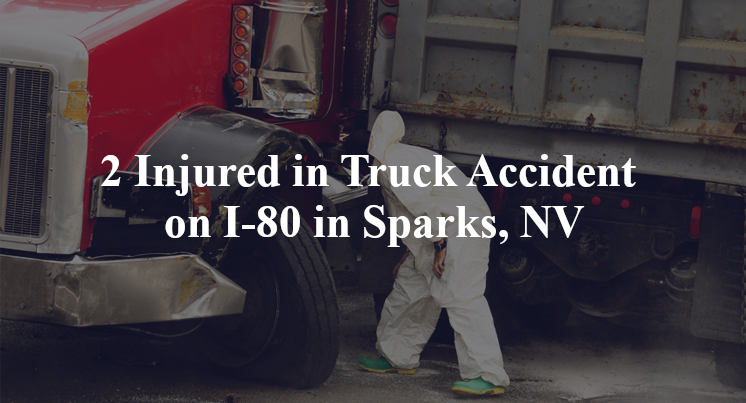
2 Injured in Truck Accident on I-80 in Sparks, NV
Sparks, NV — May 22, 2025, two people were injured in a truck accident at about 12:30 p.m. on Interstate 80 near Vista Boulevard.
Authorities said a dump truck spilled part of its load of gravel, blocking the highway near mile marker 21. A second dump truck crashed into a Subaru as traffic slowed, knocking the other vehicle into a Ford F-450 pickup.
Two people suffered non-life-threatening injuries in the crash, according to authorities, but only one of them was hospitalized.
Both truck drivers received citations after the incident, authorities said. The first dump truck driver was cited for having an unsecured load, while the other was cited for not avoiding the crash.
Authorities have not released any additional information about the Washoe County crash at this time. The accident is still under investigation.
Commentary by Attorney Michael Grossman
When two dump trucks end up cited after a highway crash, it raises an important question: Were both of these vehicles being operated safely, or were there deeper problems behind the wheel and behind the scenes? Most folks hear about a load spill and think it’s just a messy inconvenience, but in my experience, cargo coming loose can be a symptom of something far more serious.
The report says the first truck spilled part of its gravel load onto Interstate 80, forcing traffic to slow near Vista Boulevard. That tells me the load likely wasn’t secured properly. What we don’t yet know is whether the restraints failed in transit or if the gravel wasn’t tied down correctly in the first place. Both scenarios matter because they point to different failures: either the equipment wasn’t up to the task, or someone made a mistake in how they secured the load.
Unsecured cargo is a known hazard in trucking, and industry standards require that loads be secured to withstand normal driving conditions, including sudden stops and turns. So it’s not just about whether gravel fell off the truck, but how it was loaded, who loaded it and whether it was inspected before the truck hit the road.
After the spill, a second dump truck rear-ended a Subaru, pushing it into a Ford pickup. That driver got cited too, for failing to avoid the crash. On paper, it sounds straightforward, but here’s what we don’t know: Was the driver following too closely? Distracted? Traveling too fast for traffic conditions? Depending on whether traffic had just come to a sudden stop or was already backed up, very different questions arise.
We also don’t know what technology, if any, was on board these trucks. Many commercial vehicles today are equipped with in-cab cameras and engine control modules (ECMs) that capture braking behavior, speed and driver actions leading up to a crash. Those records could help answer critical questions, such as whether the second truck was being driven safely or whether its driver reacted too slowly because of inattention or fatigue.
Whenever two truck drivers in the same incident are cited — one for cargo issues, the other for collision — it suggests a breakdown in more than just one moment. These kinds of crashes often point to systemic problems, from training deficiencies to lax oversight. And while authorities are still investigating, families involved deserve a full accounting of what went wrong.
Accountability isn’t just about writing tickets; it’s about getting to the truth. That means looking at dash cam footage, phone records, training logs and hiring policies. In a courtroom, I've seen time and again how the root cause of a crash can trace back to things like rushed cargo loading, poor driver vetting or failure to enforce safety checks.
Key Takeaways:
- A spilled load suggests potential negligence in how the truck was loaded or secured.
- The second truck’s failure to stop raises questions about driver behavior and vehicle technology.
- Two citations in one crash often indicate a broader pattern of safety breakdowns.
- Critical facts remain unknown: Was the cargo properly restrained? What caused the second driver to fail to stop?
- True accountability requires an in-depth investigation using black box data, dash cams and company records.
“These are essential reads for anyone dealing with the aftermath of a truck wreck”– Attorney Cory Carlson