

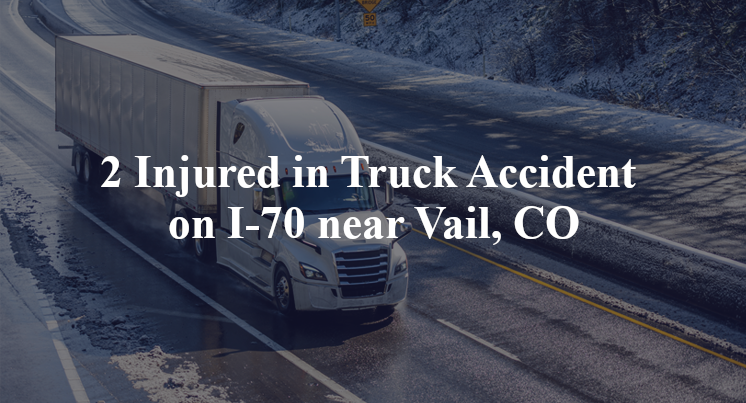
2 Injured in Truck Accident on I-70 near Vail, CO
Vail, CO — January 8, 2025, two people were injured in a truck accident at about 7:30 p.m. on Interstate 70.
Authorities said a Volvo semi-truck was westbound on Vail Pass when it rear-ended another truck, forcing both vehicles through a cable barrier in the median and across all of the eastbound lanes of the highway. Two eastbound vehicles, a Mazda CX-90 and a BMW, collided with debris from the truck crash.
Both truck drivers suffered serious injuries in the crash, according to authorities. The semi-truck was driven by a 67-year-old man from California, while the other truck driver was a 50-year-old man. Their names have not been released.
None of the occupants of the other two cars was injured, authorities said.
Authorities have not released any additional information about the crash.
The accident remains under investigation.
Commentary
A crash like this on Vail Pass underscores the unique dangers posed by large commercial vehicles, particularly in challenging mountain environments. While it’s fortunate that the occupants of the passenger cars weren’t injured, the severe injuries sustained by both truck drivers and the extensive disruption to traffic highlight the need for a thorough investigation.
The first issue that comes to mind is why the westbound semi-truck rear-ended the other truck. Mountain highways often require drivers to navigate steep grades, sharp turns and variable weather conditions. These factors demand a heightened level of attention and skill, especially for truck drivers handling heavy, cumbersome vehicles. Was the rear-end collision caused by the driver’s inattention, distraction or fatigue? Did mechanical issues, such as brake failure or insufficient maintenance, play a role? Investigating these possibilities is crucial to understanding the chain of events.
The collision’s outcome — both trucks breaching the cable barrier and crossing into oncoming traffic — raises additional concerns. While cable barriers are designed to prevent vehicles from crossing medians, they’re often less effective against heavy trucks traveling at high speeds. Did the barrier meet the required safety standards, or was it inadequate for containing such large vehicles? If so, this could point to systemic issues in the road’s design that warrant attention.
Another important consideration is whether the steep grade and potential road conditions contributed to the crash. Was the semi-truck traveling too fast for the conditions? Did icy or wet pavement affect its ability to brake? These factors are particularly relevant in mountainous areas like Vail Pass, where inclement weather is common.
Finally, the role of driver training and trucking company policies cannot be ignored. Trucking companies are responsible for ensuring that their drivers are properly trained and their vehicles adequately maintained, especially for routes that involve difficult terrain. Were the drivers prepared for the unique challenges of this route? Was the westbound truck driver following the appropriate speed and braking practices for a steep descent? These are key questions investigators should explore.
This crash highlights the complexity of incidents involving commercial trucks, particularly in high-risk environments like mountain passes. As authorities continue their investigation, it’s essential to examine every factor, from driver behavior and vehicle maintenance to road design and environmental conditions. For the injured drivers and the broader community, understanding what went wrong is the first step toward preventing similar incidents in the future.
“These are essential reads for anyone dealing with the aftermath of a truck wreck”– Attorney Cory Carlson