

1 Killed in Car Accident on Hwy. 431 in Power, MT
Power, MT — March 15, 2025, One person was killed following a car accident that occurred at around 10:25 P.M. on Highway 431.
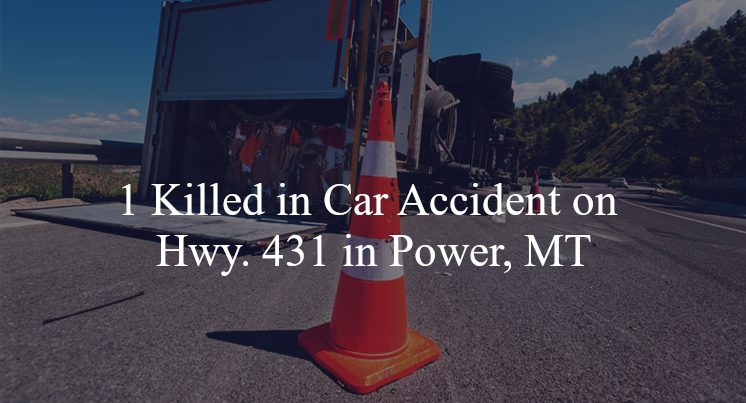
Authorities are investigating after a car accident left one person dead on Highway 431. According to official statements, a F-250 operated by a 22-year-old man was travelling on Highway 431 in the southbound lanes when for unknown reasons the vehicle lost control, causing the it to leave the roadway and strike a post, where the semi then overcorrected and rolled over.
When first responders arrived on the scene, they found that the driver had been partially ejected and sustained fatal injuries and he was pronounced deceased. At this time there has been no further information released from the accident, however this remains an ongoing investigation and more details may be released by authorities in the future.
Commentary by Attorney Michael Grossman
When I read about a crash like this, my first thought is that I hope the driver’s loved ones receive the answers they need. While it may seem like a straightforward case of a vehicle losing control, my experience has shown that these types of crashes often have more to them than meets the eye. Before drawing any conclusions, it’s essential to ask three key questions to ensure a full and thorough investigation.
The first question is whether authorities conducted a comprehensive investigation. Law enforcement officers typically document the scene, take witness statements, and assess visible evidence, but the depth of these investigations can vary. In cases where a vehicle leaves the roadway and rolls over, investigators should consider whether road conditions, visibility issues, or an unexpected obstacle played a role. Additionally, overcorrection is often a reaction to an initial loss of control, and it’s important to determine whether another vehicle, debris, or roadway design contributed to the driver’s actions.
The second question—one that is often overlooked—is whether a mechanical defect played a role in the crash. A Ford F-250 is a large, heavy-duty vehicle, and its stability depends on properly functioning brakes, steering, and suspension. If a failure in any of these systems occurred—such as a sudden brake malfunction, power steering failure, or tire blowout—it could explain why the vehicle left the roadway. Additionally, rollover crashes raise questions about crashworthiness and whether seatbelt or airbag systems functioned as designed. However, identifying a defect requires a forensic examination of the vehicle, and if it is not preserved, key evidence may be lost before it can be properly analyzed.
The third question is whether all available electronic data has been collected. Most modern vehicles are equipped with an electronic control module (ECM), which records crucial information such as speed, braking, and steering input leading up to the crash. Additionally, nearby surveillance cameras, dashcam recordings, or even data from the driver’s phone could provide valuable insight into what happened. Since electronic data can be lost or overwritten if not secured quickly, investigators must act fast to preserve this critical evidence.
At the end of the day, answering these three questions isn’t just about understanding how this crash happened—it’s about ensuring that the driver’s loved ones have access to the full truth. Serious crashes leave families searching for clarity, and the least we can do as a community is make sure that every possible explanation is explored before reaching any conclusions.
“These are essential reads for anyone dealing with the aftermath of a truck wreck”– Attorney Cory Carlson