

1 Injured in Cement Truck Accident on I-15 in Blackfoot, ID
Blackfoot, ID — April 18, 2025, One person was injured following a car accident that occurred at around 9:35 A.M. on Interstate 15.
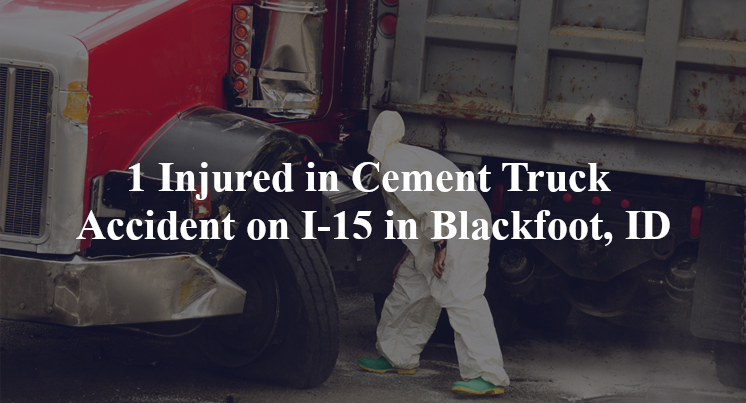
An investigation is underway following a car accident that left one person injured during the morning hours of April 18th. According to official reports, a 37-year-old female driver was operating a cement truck in the southbound lanes of Interstate 15 near mile marker 94, when for unknown reasons the truck lost control and was followed by an overcorrection which resulted in the truck tipping over.
When emergency crews arrived on the scene they found that the driver had sustained serious injuries and she was transported to the hospital for treatment. It remains unknown at this time what caused the truck to lose control, and the identity of the truck's driver has not been released, however as authorities continue to investigate more details may be released in the future.
Commentary by Attorney Michael Grossman
When I hear that a cement truck tipped over on the highway, my first question is never what happened? It's how do we figure out what really happened? Most people understandably think a crash is explained by what’s visible at the scene—skid marks, vehicle positions, weather conditions—but in commercial truck cases, what matters most is what we don’t see right away.
For one, this kind of crash raises immediate concerns about the mechanical condition of the truck and the driver’s actions leading up to the rollover. Was there a tire failure? Steering problem? Brake issue? Or was the truck’s cargo improperly loaded, shifting its center of gravity and making it unstable during routine maneuvers? These aren’t just hypothetical possibilities—they’re the kinds of questions that must be answered through evidence beyond the crash scene.
There’s also the matter of overcorrection. That term often pops up when something unexpected happens and the driver reacts in a way that makes the situation worse. Inexperienced or undertrained drivers are especially vulnerable to this. So, when a professional driver loses control and then overcorrects, it’s important to know what kind of training they received. Did the employer ensure this person had proper instruction for handling emergency situations in a high-center-of-gravity vehicle like a cement truck? That’s not something that gets figured out with a measuring tape at the scene—it comes from digging into hiring records, training logs, and the driver’s background.
Another overlooked piece of the puzzle is what technology was on board the vehicle. Cement trucks—like most commercial vehicles—are increasingly equipped with engine control modules, GPS tracking, and even dashcams. These systems can show how fast the driver was going, whether the brakes were applied, and what steering inputs were made. Without that data, we’re left with assumptions. With it, we can build a picture that’s rooted in fact.
It’s possible that this was just a freak accident. But I’ve worked on too many cases where the real answer came weeks or even months after the crash—after someone took the time to ask the hard questions and dig into the evidence that doesn’t lie in the road.
From my point of view, the goal of any truck crash investigation isn’t just to describe what happened—it’s to make sure that the right people are held responsible, based on what really caused the crash. That requires more than a quick report. It requires thorough, independent investigation into every link in the chain—from the driver, to the employer, to the condition of the vehicle
“These are essential reads for anyone dealing with the aftermath of a truck wreck”– Attorney Cory Carlson