

Motorcyclist Killed in Tow Truck Accident on McFadden Avenue in Huntington Beach, CA
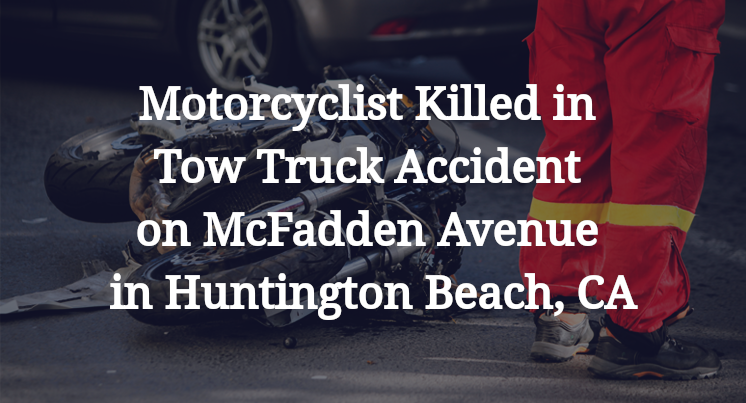
Huntington Beach, CA — August 15, 2025, a motorcyclist was killed in a tow truck accident at about 3 p.m. on McFadden Avenue near Springdale Street.
Authorities said a Yamaha R1 motorcycle crashed into the back of a Ford tow truck that had stopped west of Springdale Street.
The motorcyclist, a 37-year-old man, died from injuries suffered in the crash, according to authorities. His name has not been made public yet.
The tow truck driver was not hurt, authorities said.
Authorities have not released any additional information about the Huntington Beach crash at this time.
Commentary by Attorney Michael Grossman
When someone hears that a motorcyclist crashed into the back of a stopped tow truck, a few questions immediately come to mind. Was the truck stopped in traffic? Pulled to the side of the road? Parked illegally? Without answers to those basic questions, it’s impossible to say who’s responsible, or even what kind of crash this was.
Based on the limited reports so far, we know a Yamaha R1 motorcycle hit the rear of a Ford tow truck that had stopped west of Springdale Street. What’s missing is any explanation of why the truck was stopped and whether it was visible and reasonably positioned. Depending on those details, the legal picture could look very different.
If the truck was actively stopped in traffic, visibility might not be an issue. But if it was stopped or parked outside of traffic lanes — say, in the roadway’s shoulder or bike lane — then it’s important to know whether the vehicle was properly marked or using its hazard lights. A tow truck, after all, is a large and often slow-moving vehicle that can easily become a hazard if not clearly visible, especially around a curve or near an intersection.
Another angle to consider is what tools are available to help figure out what actually happened. Many tow trucks today are equipped with dash cams and GPS systems. That kind of data can help show whether the truck was actively working a job, idling for an extended period or improperly stopped. Likewise, any surveillance footage from nearby businesses could show how long the truck had been sitting there and whether other motorists had to swerve around it before the motorcycle arrived.
Some people may assume that rear-end crashes are always the fault of the person in back. That’s not necessarily true, especially with commercial vehicles. I once worked a case where a delivery truck stopped without warning in a dark stretch of road. My client was blamed for not stopping in time, but dash cam footage and black box data told a different story. The truck’s lights weren’t functioning properly, and its location didn’t line up with any legitimate work zone. Once the evidence was laid out, it became clear the company behind the truck bore the bulk of the responsibility.
At this stage, there’s too much we don’t know about the Huntington Beach crash. Was the truck where it should have been? Was it marked or lit properly? Did the motorcyclist have a clear line of sight? These are basic but critical questions. Until someone obtains and reviews the available evidence — vehicle data, camera footage and scene documentation — there’s no way to know who, if anyone, should be held accountable.
Key Takeaways:
- It’s not yet clear why the tow truck was stopped or whether it was safely positioned.
- Rear-end crashes aren’t always the fault of the trailing vehicle, especially when commercial trucks are involved.
- Dash cams, GPS data and surveillance footage may help determine whether the tow truck was properly marked and visible.
- The truth about what happened can only be uncovered through a thorough, independent investigation.
“These are essential reads for anyone dealing with the aftermath of a truck wreck”– Attorney Cory Carlson